The Foundation: Strategic Menu Planning
Effective weekly prep starts before you touch a single ingredient. Smart menu planning focuses on recipes that share components — think grain bowls where you cook quinoa once but dress it differently throughout the week, or a batch of roasted vegetables that becomes salad toppings Monday, stir-fry filling Wednesday, and soup base Friday.
Choose recipes with overlapping ingredients but varied flavor profiles. A batch of seasoned ground turkey works in Mediterranean bowls with tzatziki and cucumber, Mexican-inspired meals with salsa and black beans, or Asian-style lettuce wraps with ginger and soy. This approach maximizes your cooking efficiency while preventing menu fatigue.
Batch cooking shines when you select ingredients that hold well in the refrigerator. Hardy vegetables like roasted sweet potatoes, Brussels sprouts, and cauliflower maintain their texture for days. Grains like rice, quinoa, and farro actually improve in texture after resting. Proteins benefit from marinating time, so that chicken you season on Sunday tastes even better by Tuesday.
The Two-Hour Timeline
Successful meal prep operates on parallel cooking — multiple dishes progressing simultaneously rather than one completed recipe at a time. Start with items requiring the longest cooking time, typically roasted vegetables and slow-cooking grains, then layer in quicker tasks while those foundation elements cook.
Begin by preheating your oven and starting any grain that needs 45 minutes or more. Brown rice, wild rice, and whole wheat pasta fall into this category. While the oven heats, wash and chop all vegetables for roasting. Uniform sizing ensures even cooking — aim for pieces roughly the same size rather than perfect precision.
Once vegetables hit the oven, shift to protein preparation. Season chicken thighs or salmon fillets for baking alongside the vegetables, or brown ground meat on the stovetop. This is also the ideal time for prep work that doesn't require cooking — washing salad greens, chopping herbs, mixing dressings, or portioning snacks.
The final 30 minutes handle assembly and storage. Cooked components need to cool slightly before refrigeration, making this the perfect window for quick-cooking items like scrambled eggs for breakfast bowls or sautéed greens that will become soup additions later in the week.
Maximizing Your Cooking Equipment
Two hours of meal prep demands every available cooking surface. Your oven can simultaneously roast vegetables on one rack and bake protein on another — just ensure adequate air circulation between pans. Sheet pan meals excel here because they require minimal attention once properly seasoned and arranged.
Stovetop real estate becomes precious during intensive batch cooking. Use your largest pot for grains or pasta, a medium pan for browning proteins, and keep one burner free for quick tasks like blanching vegetables or toasting spices. A slow cooker or rice cooker, if available, handles hands-off cooking while you focus on active prep.
Proper mise en place accelerates everything. Before any heat gets turned on, arrange all ingredients, seasonings, and storage containers within easy reach. Wash produce, measure spices, and line up containers in the order you'll fill them. This restaurant technique prevents mid-cooking scrambles for missing ingredients or storage solutions.
Smart Storage and Portioning
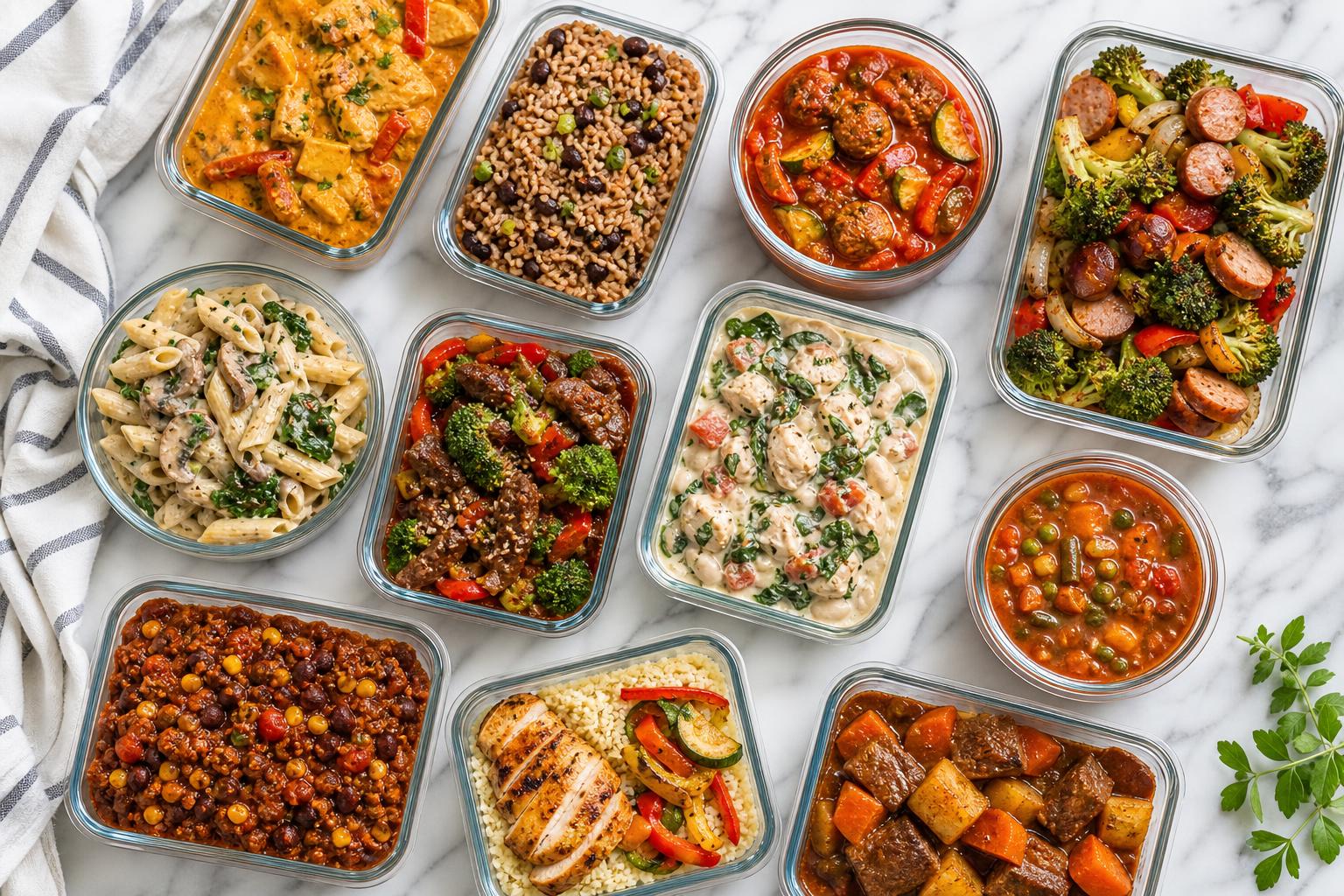
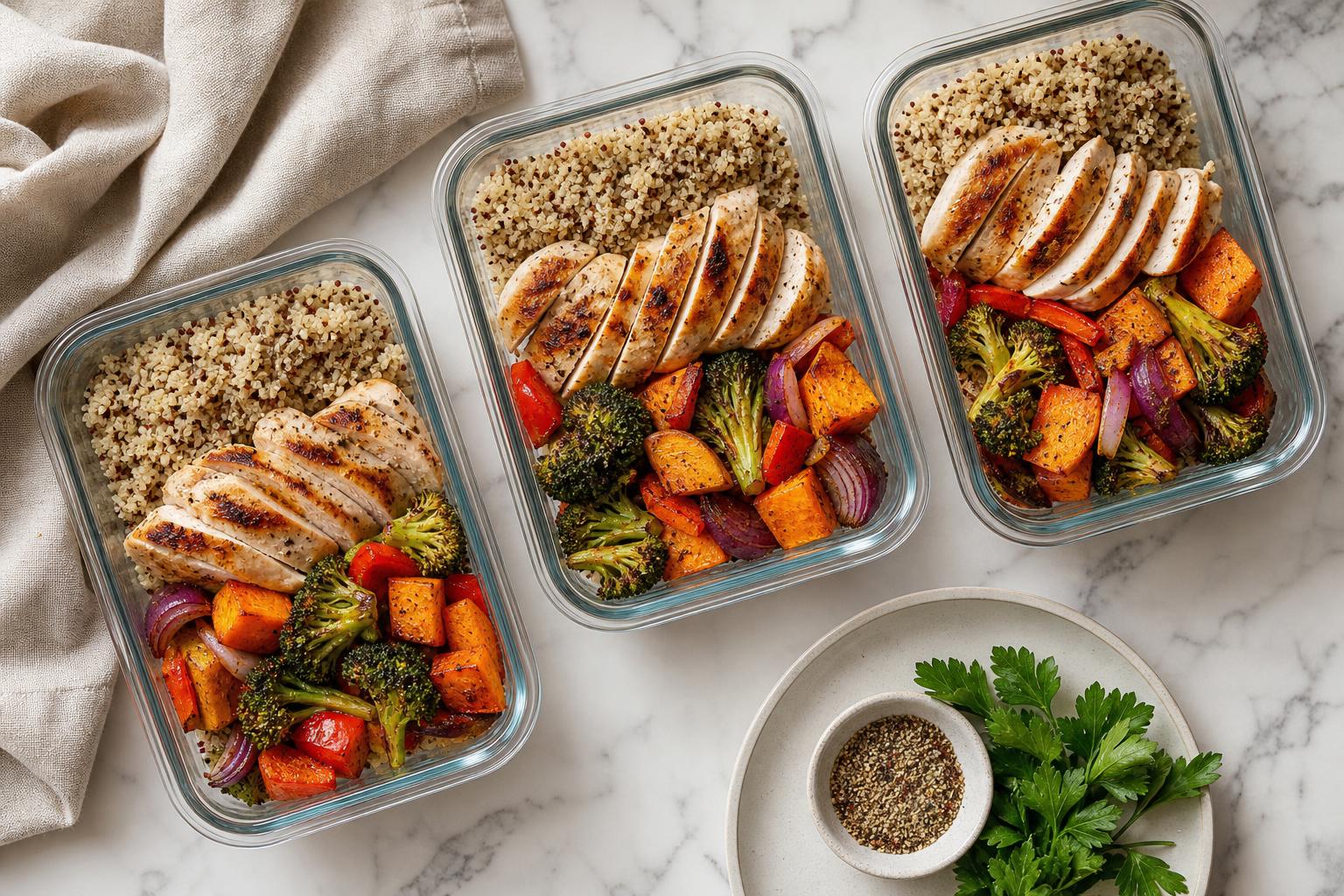
How you store prepped food determines both its longevity and your weekday convenience. Glass containers with tight-fitting lids maintain food quality better than plastic alternatives and allow you to see contents at a glance. Invest in various sizes — large containers for bulk items like cooked grains, medium ones for portioned meals, and small containers for dressings and sauces.
Separate components that benefit from different storage conditions. Keep crispy elements like toasted nuts or fresh herbs separate from moisture-heavy items like cooked vegetables or dressings. This prevents textural deterioration and allows you to combine elements just before eating for optimal results.
Portion control happens naturally when you divide bulk-cooked items into individual serving containers. This approach also speeds weekday meal assembly — grab a container of pre-portioned protein, another of vegetables, add fresh elements like avocado or herbs, and dress just before eating. Many people find this method helps with consistent nutrition throughout the week.
Keeping It Fresh Throughout the Week
Even perfectly executed meal prep requires strategy for maintaining quality over seven days. Plan to use more delicate items like fish or leafy greens earlier in the week, saving heartier ingredients like roasted root vegetables and grain-based dishes for later days.
Freezer storage extends your options significantly. Cooked grains freeze beautifully in portion-sized amounts and reheat perfectly in the microwave. Soups, stews, and casseroles often taste better after freezing, as flavors continue developing during storage. Prepare these items during your two-hour window, then freeze half for the following week.
Strategic fresh additions prevent monotony. A batch of roasted chicken becomes three distinct meals when paired with different fresh components — mixed greens and vinaigrette for salads, fresh herbs and lemon for Mediterranean flavors, or crisp vegetables and peanut sauce for Asian-inspired bowls.
Weekly meal prep transforms from overwhelming project to manageable routine once you develop systems that work for your schedule and preferences. If meal planning around your specific dietary needs, cuisine preferences, and weekly schedule sounds useful, that's exactly what MealAI does. It's free at usemealai.com.