The Case for Korean Meal Prep
Korean cuisine might be the most underutilized approach to meal prep in Western kitchens, which is a shame because it's practically designed for advance preparation. Many Korean dishes rely on fermented ingredients, marinated proteins, and pickled vegetables — components that develop deeper flavors as they sit. Unlike Italian pasta or Indian curries that can lose their spark after a few days, Korean meal prep actually gets better with time.
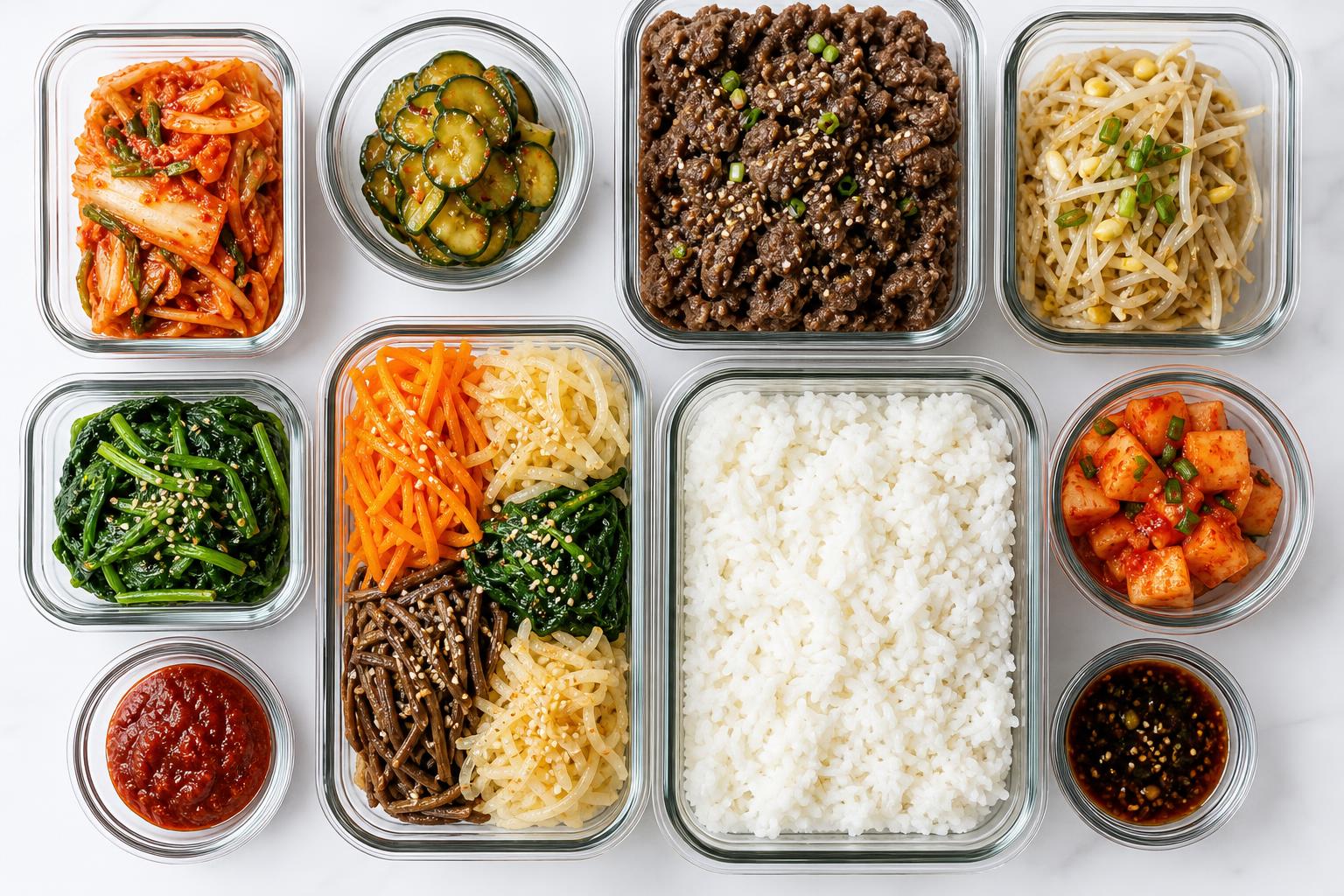
The foundation of Korean meal prep lies in understanding banchan — the small side dishes that accompany most Korean meals. These aren't afterthoughts but carefully balanced components that provide varying textures, flavors, and nutrients. When you prep banchan alongside your main proteins and grains, you create a modular system where each meal feels complete and varied, even when assembled from the same base components.
Bibimbap exemplifies this approach perfectly. The name literally means "mixed rice," and the dish thrives on the interplay between seasoned vegetables, marinated meat, pickled elements, and the nutty richness of sesame oil. Each component can be prepared separately and combined fresh, making it ideal for weekly meal prep.
Building Your Korean Prep Foundation
Successful Korean meal prep starts with understanding which elements improve with time and which should stay fresh. Marinated proteins like bulgogi beef or dakgalbi chicken actually benefit from extended contact with their seasonings. Gochujang-based marinades, which combine fermented chili paste with soy sauce, garlic, and often a touch of sweetness, penetrate deeper into proteins over 24-48 hours.
Vegetable preparation follows a different timeline. Some Korean vegetable dishes, like seasoned spinach (sigeumchi namul) or pickled radish, can last a full week in the refrigerator while maintaining their intended texture and flavor. Others, like fresh cucumber salad, should be assembled no more than two days ahead to prevent excessive water release.
Rice preparation deserves special attention in Korean meal prep. Short-grain rice, the standard for Korean cooking, reheats more successfully than long-grain varieties because of its higher starch content. Cook larger batches and portion them into meal-sized containers — they'll reheat with better texture than rice that's been sitting in one large container.
Bibimbap Bowl Assembly Strategy
The beauty of bibimbap for meal prep lies in its component-based structure. Rather than preparing complete bowls that might become soggy, prepare each element separately and combine them fresh. This approach also allows for variety throughout the week — the same base components can create different flavor profiles depending on which elements you emphasize.
Start with your vegetable components, which form the nutritional and textural backbone of the dish. Seasoned vegetables like fernbrake (gosari), bean sprouts (kongnamul), and carrots can be prepared in larger quantities and portioned throughout the week. Each vegetable gets its own seasoning treatment — typically involving sesame oil, garlic, and salt, but with variations that complement the specific vegetable's natural character.
Protein options for bibimbap extend well beyond the traditional bulgogi beef. Marinated tofu works excellently for plant-based versions, while ground turkey or chicken can be seasoned with similar flavor profiles for a lighter option. The key is ensuring your protein has enough seasoning to stand up to the other bold flavors in the bowl without overwhelming the vegetables.
The final assembly happens at mealtime, not during prep. Layer your reheated rice with the various vegetable and protein components, add a fried egg if desired, and finish with gochujang sauce mixed with a small amount of sesame oil. This last-minute assembly ensures each component maintains its intended texture and prevents the rice from becoming soggy.
Beyond Bibimbap: Korean Meal Prep Variety
While bibimbap provides an excellent foundation, Korean cuisine offers numerous other meal prep opportunities. Korean grain bowls can incorporate different base grains like barley or quinoa while maintaining traditional Korean flavoring approaches. These variations provide textural interest and different nutritional profiles while using similar preparation techniques.
Soup-based meals also work well for Korean meal prep, though they require different strategies. Kimchi jjigae (kimchi stew) and doenjang jjigae (soybean paste stew) actually improve in flavor after a day or two, as the fermented elements have more time to meld with the other ingredients. Portion these soups into individual containers and reheat gently to maintain their intended consistency.
Korean-style protein preparations can anchor multiple different meals throughout the week. A batch of bulgogi beef might appear in bibimbap bowls early in the week, then be repurposed into lettuce wraps or served alongside different vegetable combinations. This flexibility prevents meal fatigue while maximizing your prep time investment.
Practical Korean Meal Prep Timeline
Effective Korean meal prep requires understanding the optimal timing for different components. Weekend preparation typically works best for the more time-intensive elements like marinated proteins and seasoned vegetables. These components benefit from the longer preparation time and actually improve over the first few days of storage.
Mid-week refreshers keep your meals interesting without requiring full re-preparation. Quick-pickling fresh vegetables like cucumbers or radishes takes only 30 minutes and provides bright, crunchy contrast to the deeper flavors of your prepared components. Similarly, preparing fresh herbs like perilla or scallions just before assembly adds aromatic freshness to meals that might otherwise feel heavy.
Grain and rice preparation can happen on a flexible schedule based on your preferences and storage capacity. Some people prefer cooking fresh rice every few days, while others batch-cook larger quantities and reheat as needed. Both approaches work well with Korean meal prep — the key is ensuring your grains are properly stored and reheated with adequate moisture.
Korean meal prep succeeds because it aligns with how Korean cuisine naturally functions — as a collection of complementary elements that can be mixed and matched based on preference and availability. This flexibility makes it particularly suitable for busy schedules while maintaining the complex, satisfying flavors that make Korean food so appealing.
If meal planning around your week — your diet, your budget, your cuisines — sounds useful, that's exactly what MealAI does. It's free at usemealai.com.